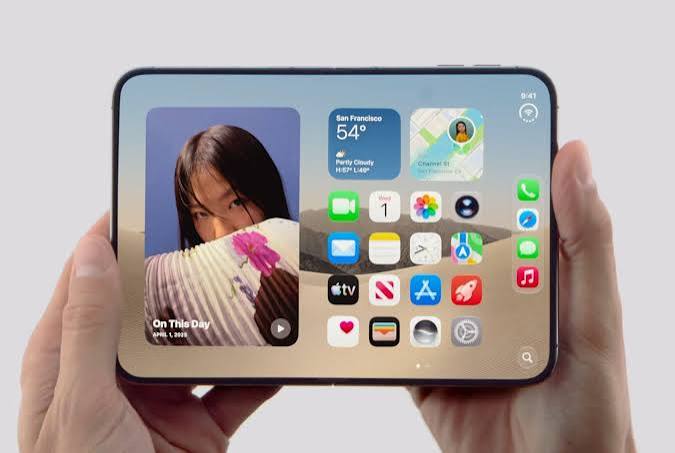
The iPhone Duo is here, and it changes what an iPhone can be. Apple's first foldable phone folds down to a normal-sized iPhone, then opens into a 7.6-inch screen that looks and feels like a small tablet. This review covers the design, the display, the A20 Pro chip, the cameras, the battery, iOS 27, and whether the $1,999 starting price makes sense for most people.
After years of watching Samsung, Google, and Honor sell foldable phones, Apple has finally joined in. The iPhone Duo was announced at Apple's "Surprise and Shine" event alongside the iPhone 18 Pro lineup, and it is the first phone under new Apple CEO John Ternus to headline a launch. It is also the most different iPhone Apple has shipped since the original model in 2007.
Before we get into every spec, here is the short version. The iPhone Duo gives you two phones in one: a compact 5.4-inch phone when closed, and a wide 7.6-inch screen when open. It runs the same chip as Apple's most powerful phone, adds a second battery to keep it going all day, and reshapes iOS around two screens instead of one. It costs more than any regular iPhone, and it skips a few things buyers may expect, like a telephoto camera and Face ID. We'll explain exactly what that trade-off means below.
What Is the iPhone Duo?
The iPhone Duo is a book-style foldable phone. That means it opens sideways, like a small book or a paperback novel, rather than flipping up and down like a clamshell phone. When closed, you hold it and use it just like a normal iPhone, with a 5.4-inch screen on the outside. Open it, and the phone unfolds into one continuous 7.6-inch display, roughly the size of a small tablet.
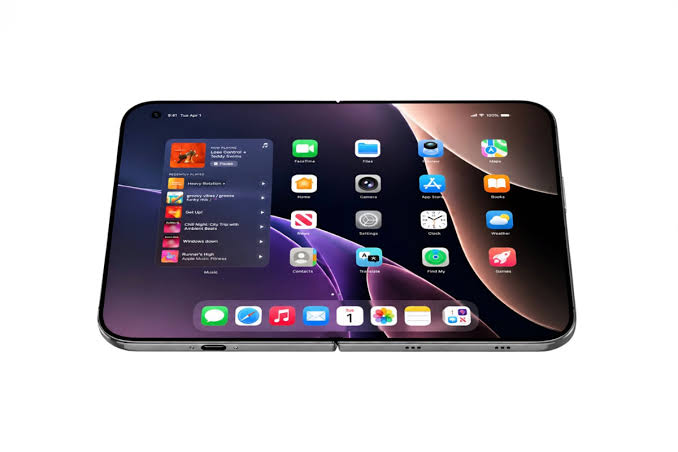
This form factor is similar to the Samsung Galaxy Z Fold series, but Apple built its own hinge, its own foldable glass, and a version of iOS made specifically for two screens. Apple calls this "iOS 27 tailored for iPhone Duo," and it changes small things like where your controls sit, how apps snap into place, and how the Home Screen behaves when the phone is open.
Design and Build: Titanium, Two Screens, One Phone
Apple built the iPhone Duo out of Grade 5 titanium, the same aerospace-grade metal used on its Pro iPhones. The back is covered in Ceramic Shield, and the front display uses an upgraded Ceramic Shield 2 layer for extra scratch resistance. The phone comes in two colors: Star White and Night Sky.
How Big Are the Screens?
There are two displays to think about:
- Outer display: 5.4 inches, Super Retina XDR, giving about 90 percent of the screen area of the iPhone 18 Pro. This is the screen you see and use when the phone is closed.
- Inner display: 7.6 inches, also Super Retina XDR, and around 50 percent larger than the iPhone 18 Pro Max screen. This is the biggest display Apple has ever put on an iPhone.
Both screens share the same aspect ratio. That is a small detail with a big effect: photos, videos, and apps scale cleanly between the two screens instead of stretching or shrinking oddly when you fold or unfold the phone.
Closed vs Open: Thickness and Weight
Foldable phones live or die on how comfortable they feel in daily use, so the numbers here matter. The iPhone Duo measures 5.2mm thick when fully open, which Apple says makes it the thinnest iPhone ever made in that state. Folded shut, it measures 11.3mm thick. The whole phone weighs 254 grams, noticeably heavier than a normal iPhone but in line with other book-style foldables on the market.
The Hinge Apple Built From Scratch
Apple designed a new precision hinge with more than 100 tiny components. The goal is a smooth, satisfying open-and-close motion, plus a hinge that holds the display flat without any wobble when it's open. Apple also gave the iPhone Duo an IP68 rating for dust and water resistance, which is unusual for a foldable phone, since folding mechanisms are normally the weak point for sealing a device against water.
Display Quality: Nano-Texture and the Crease Question
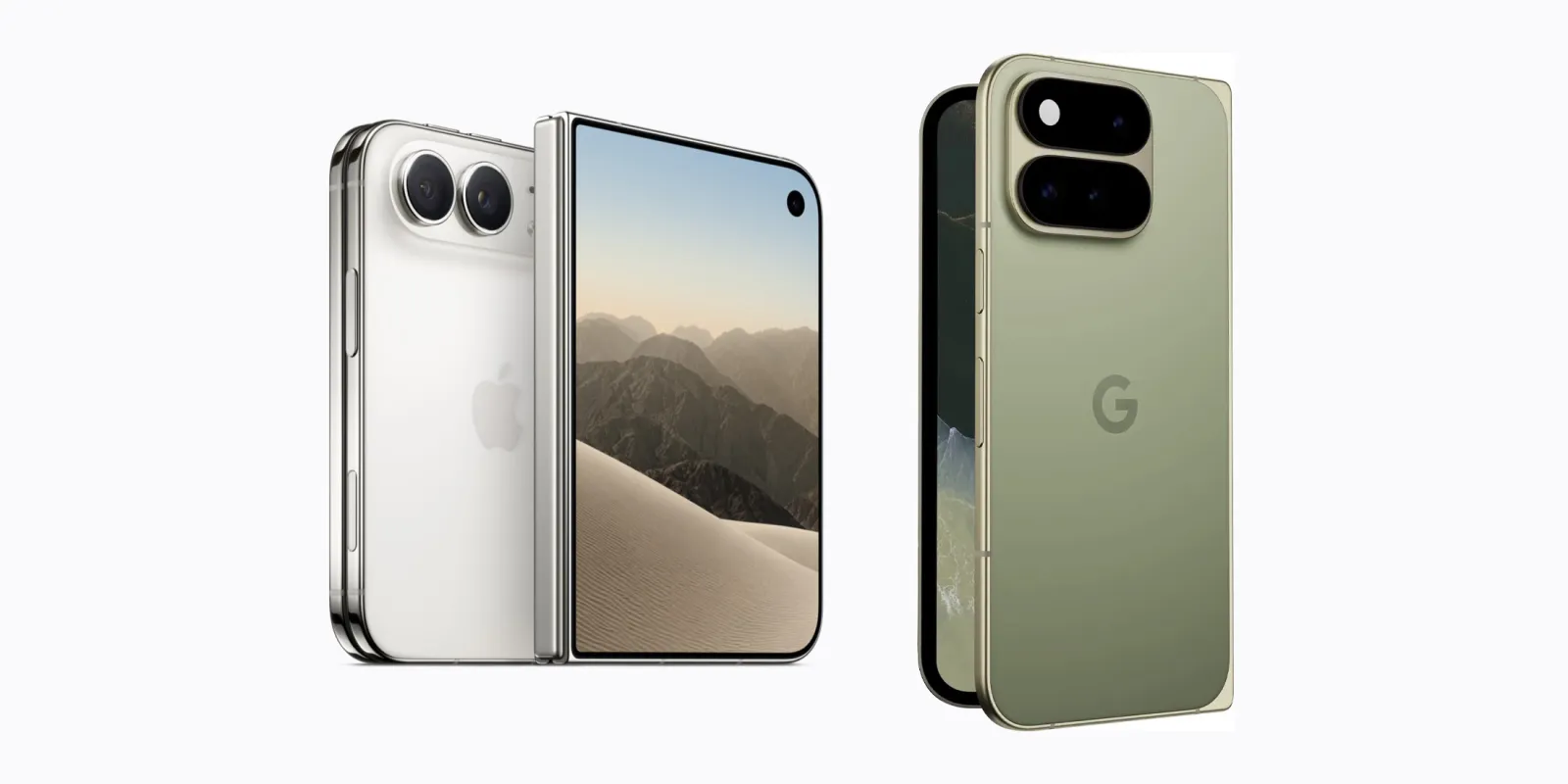
Every foldable phone deals with the same question: how visible is the crease down the middle of the screen? Apple gave the inner display a nano-texture finish, a special matte coating that scatters light instead of reflecting it directly. This cuts down glare in bright rooms and, according to Apple, also makes the fold line less noticeable when you're looking at the screen straight on.
That said, no foldable phone has completely solved the crease problem, and the iPhone Duo is not likely to be the first. What Apple has done is make it easier to ignore in normal use, which is really the best any foldable can offer right now.
Performance: A20 Pro Chip Explained
The iPhone Duo runs the exact same A20 Pro chip as the iPhone 18 Pro, with no cut-down or lower-power version. That is worth pointing out because past foldable phones from other brands have sometimes used slower chips than their flagship siblings. Apple didn't do that here.
What Makes A20 Pro Different From A19 Pro
The A20 Pro is built on a 2-nanometer process, which is currently the smallest, most efficient chip-making process available. In plain terms, a smaller process usually means more speed without using more battery. Here's what Apple claims:
- A 6-core CPU (2 high-power cores plus 4 efficiency cores) that is up to 20 percent faster than the A19 Pro
- A 7-core GPU with Neural Accelerators that is up to 40 percent faster for graphics and gaming
- A Dual 16-core Neural Engine, giving twice the AI processing power of the previous generation, used for Siri AI and on-device Apple Intelligence features
- 50 percent more unified memory bandwidth, which helps the phone handle two active displays and heavier multitasking
- A custom vapor chamber for cooling, which keeps performance steady during long gaming sessions or video exports
Apple also says the iPhone Duo delivers up to 35 percent better sustained performance compared with the iPhone 17 Pro. Sustained performance means how well a chip keeps its speed during long tasks, rather than just its peak speed in a short burst, which matters more for real-world use like gaming or video editing.
The New C2 Modem
Alongside the A20 Pro, the iPhone Duo uses Apple's second-generation C2 modem. Apple says it is up to 50 percent faster than the previous C1X modem, uses up to 15 percent less battery, and adds 5G mmWave support in the United States. The modem also includes AI features aimed at reconnecting to a network faster when you're in an area with weak signal.
Cameras: 48MP Dual Fusion System
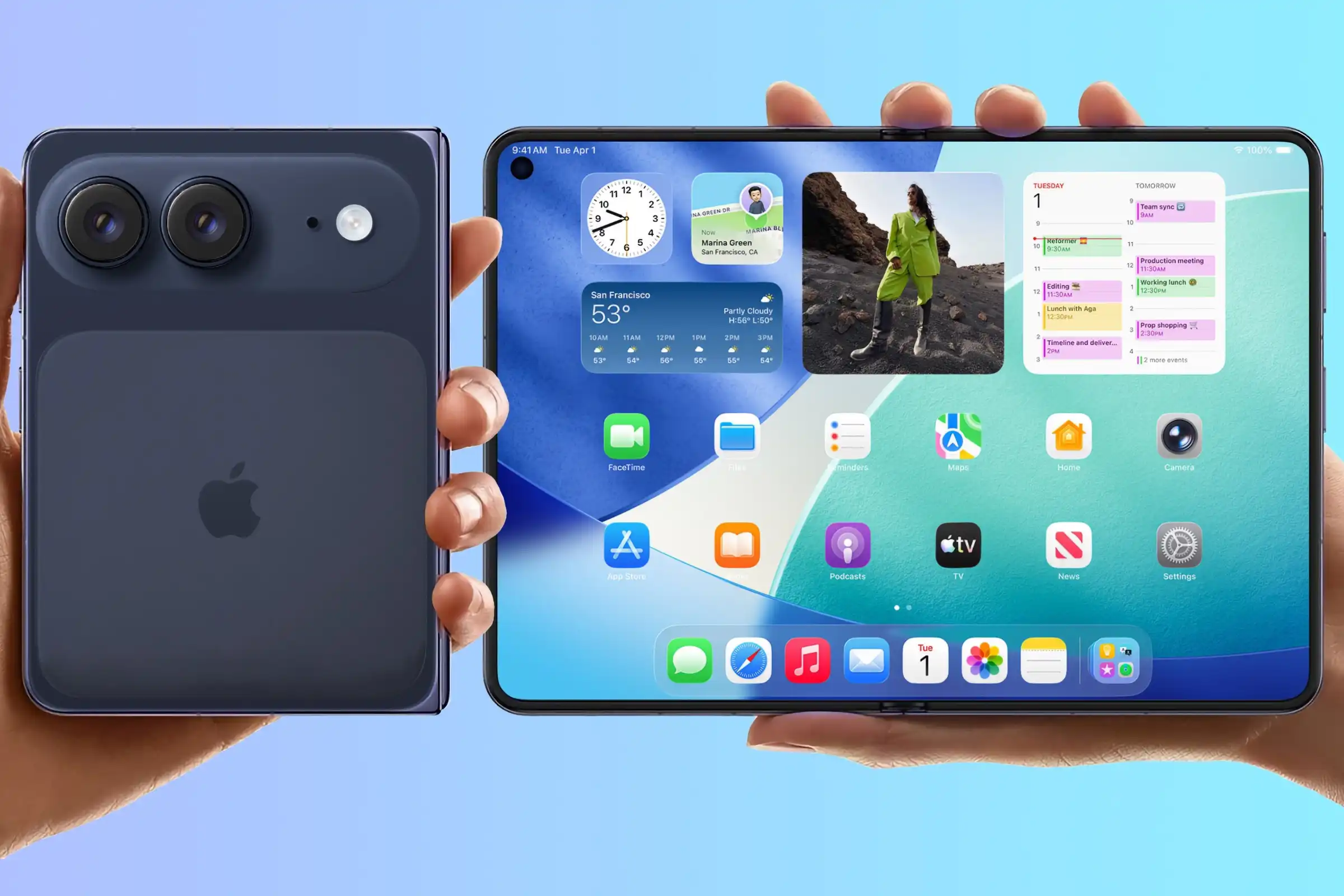
The rear camera setup on the iPhone Duo uses two 48-megapixel sensors:
- 48MP Fusion Main: 26mm, f/1.6 aperture, sensor-shift optical image stabilization, with a 12MP optical-quality 2x crop built in
- 48MP Fusion Ultra Wide: 13mm, f/2.2 aperture, 120-degree field of view
Together, these give a 4x optical-quality zoom range and digital zoom up to 10x. The rear camera can shoot 4K video at 120 frames per second in Dolby Vision, and Apple says the phone's own folding design lets it stand up on its own as a hands-free tripod for time-lapses and video calls.
Duo-Only Camera Tricks
Because the iPhone Duo has two screens facing two directions, Apple built four camera features that no other iPhone offers:
- Smart Take: automatically captures a photo when everyone in the frame is smiling and looking at the camera
- Duo Preview: shows the person being photographed a live preview on the outer screen, so they can check their own pose
- Kid Cue: plays fun animations on the outer display to hold a child's attention during a photo
- Duo FaceTime: lets someone standing nearby join a FaceTime call through the outer screen without needing their own phone
There's also a FaceTime camera hidden underneath the inner display, rated at f/1.8, which works whether the phone is fully open or propped up on a table.
What's Missing: No Telephoto Lens
Here's the trade-off. The iPhone Duo does not have a dedicated telephoto lens, unlike the iPhone 18 Pro. That's the clearest compromise on the whole device, and it means photos taken at long distances won't look as sharp as they would on Apple's regular Pro phones. For a phone starting at $1,999, this is the one spec that may frustrate camera-focused buyers the most.
Battery Life and Charging
Instead of one large battery, the iPhone Duo uses what Apple calls a dual-battery architecture, with one battery cell built into each half of the folding body. iOS manages both cells as a single battery, so you never have to think about which one is being used. Apple built this design because the phone is only 5.2mm thick when open, leaving very little room for a traditional single-cell battery.
Apple's official battery estimates are:
| Usage Pattern | Battery Life (Apple's Claim) |
|---|---|
| Video playback, inner 7.6" display | Up to 31 hours |
| Video playback, outer 5.4" display | Up to 44 hours |
| Typical mixed use (both screens) | Up to 24 hours |
Typical use, in Apple's own definition, includes messaging, taking photos, streaming music and video, browsing the web, using social apps, gaming, and navigation, based on median usage across iPhone owners. Real-world battery life will always vary depending on your settings, signal strength, and how often you keep the phone unfolded.
Charging is handled through USB-C, with support for up to 50 percent charge in around 20 minutes when using a 60W or faster adapter. No power adapter is included in the box, only a USB-C cable, so hitting that fast-charging number means owning or buying a compatible charger separately. The phone also supports MagSafe and Qi2 wireless charging at up to 25W, and it's an eSIM-only device, which frees up internal space that Apple used for the second battery cell.
Software: iOS 27 Built for Two Screens
The iPhone Duo ships with iOS 27, and Apple rebuilt several parts of the interface specifically for the fold. Here's what changes:
- Lock-screen controls, battery status, and signal icons move to the side of the display to leave more vertical room for content
- When the phone is open, you see two Home Screen pages side by side, with Today View (your scrolling widgets) pinned to the left
- Split View lets you run two different apps side by side, and you can drag and drop files, photos, or text between them
- You can prop the phone half-open on a table (called tabletop mode) to watch a video on top while using another app on the bottom half
- Siri AI and Apple Intelligence features run throughout the system, powered by the A20 Pro's Dual Neural Engine
Apple also confirmed that a handful of major apps, including Netflix, Zoom, and Slack, have already been updated to take advantage of the larger unfolded screen at launch, rather than simply stretching their normal phone layout.
Touch ID, No Face ID? What We Know
One of the more surprising design choices is that the iPhone Duo drops Face ID entirely. Instead, Touch ID is built into the side button, similar to the iPhone SE and iPad Air, and it supports multiple enrolled fingerprints. You can also unlock the phone using a paired Apple Watch.
This is likely a space problem rather than a feature decision. Fitting a Face ID sensor array behind an under-display camera, inside a phone that's only 5.2mm thick when open, appears to have been too tight a squeeze for this first-generation design. Depending on how attached you are to Face ID, this will either feel like a fair trade-off for a thinner foldable, or a step backward on a phone that costs close to $2,000.
iPhone Duo Price and Storage Options
The iPhone Duo starts at $1,999 for the base 256GB model. Here is the full lineup:
| Storage | Price (USD) |
|---|---|
| 256GB | $1,999 |
| 512GB | Pricing confirmed at checkout |
| 1TB | Pricing confirmed at checkout |
| 2TB | $3,199 |
Both colors, Star White and Night Sky, are priced the same across all storage tiers.
iPhone Duo vs iPhone 18 Pro Max
If you're deciding between Apple's biggest regular phone and its first foldable, here's how the two compare on paper:
| Spec | iPhone Duo | iPhone 18 Pro Max |
|---|---|---|
| Display | 5.4" outer / 7.6" inner foldable | Single fixed display, no fold |
| Chip | A20 Pro | A20 Pro |
| Rear Cameras | 48MP Main + 48MP Ultra Wide, no telephoto | 48MP Main + Ultra Wide + dedicated Telephoto |
| Biometrics | Touch ID in side button | Face ID |
| Thickness | 5.2mm open / 11.3mm closed | Standard single-slab thickness |
| Starting Price | $1,999 | Lower than iPhone Duo |
In short, choose the iPhone 18 Pro Max if camera zoom and Face ID matter most to you. Choose the iPhone Duo if you want a bigger screen for reading, multitasking, and watching video, and you don't mind the extra cost and the fingerprint sensor instead of face unlock.
iPhone Duo vs Samsung Galaxy Z Fold Line
Samsung has sold book-style foldables for years, so comparisons are inevitable. The biggest difference isn't hardware, it's software maturity. Samsung's Android-based foldable interface has had several years to refine app scaling and multitasking. Apple's iOS 27 foldable experience is brand new, which means some third-party apps may not be fully optimized for the fold at launch, even though Apple highlighted early support from apps like Netflix, Zoom, and Slack.
On hardware, Apple's use of the same top-tier A20 Pro chip found in its regular flagship, plus an IP68 rating, puts the iPhone Duo in a strong starting position compared with most first-generation foldables from other brands.
Price is another area worth comparing. Samsung's high-end Fold models have typically launched close to the $1,899 mark, which puts the iPhone Duo's $1,999 starting price slightly above its closest Android rival. Whether that gap feels justified will likely come down to how much value you place on Apple's ecosystem, the A20 Pro's raw performance, and the extra durability from the IP68 rating and titanium frame.
Advantages and Disadvantages
Advantages
- Largest display ever offered on an iPhone, with a nano-texture finish that cuts glare
- Full-power A20 Pro chip, not a cut-down version
- Dual-battery design gives strong estimated battery life for a foldable
- IP68 water and dust resistance, rare for a foldable phone
- iOS 27 rebuilt around multitasking and Split View for the larger screen
- Titanium build with Ceramic Shield front and back
Disadvantages
- No dedicated telephoto camera lens
- No Face ID; Touch ID only
- Apple Pencil support isn't available at launch
- Starting price of $1,999 is well above every other current iPhone
- Heavier and thicker when folded than a standard iPhone
- No power adapter included in the box for fast charging
Who Should Buy the iPhone Duo?
The iPhone Duo makes the most sense for people who already read, watch, or work on their phone for long stretches and want more screen space without carrying a separate tablet. It's also a strong pick for anyone deep in the Apple ecosystem who has been eyeing a foldable but didn't want to leave iOS behind.
It's a harder sell if photography is your main priority, since the lack of a telephoto lens is a real limitation at this price. It's also not the right choice if Face ID is a feature you rely on daily, or if you'd rather wait for Apple Pencil support and a lower starting price on a future model.
Think about how you actually use your current phone before deciding. If you often find yourself reaching for a tablet or laptop just to read a long document, edit a spreadsheet, or watch a show on a bigger screen, the iPhone Duo removes the need to carry that second device. If your phone use is mostly quick messages, social scrolling, and photos, a regular iPhone will do the same job for a lot less money, and it will fit more easily into your pocket.
Quick Specifications
| Spec | Apple iPhone Duo |
|---|---|
| Outer Display | 5.4" Super Retina XDR |
| Inner Display | 7.6" Super Retina XDR, foldable, nano-texture finish |
| Chipset | A20 Pro, 2nm, 6-core CPU, 7-core GPU, Dual 16-core Neural Engine |
| Modem | Apple C2, 5G mmWave (US), eSIM only |
| Rear Cameras | 48MP Main (f/1.6) + 48MP Ultra Wide (f/2.2) |
| Front Camera | Under-display, f/1.8 |
| Battery | Dual-battery, up to 24 hrs typical use, up to 31 hrs inner display video |
| Charging | USB-C, 50% in ~20 min (60W+), MagSafe/Qi2 up to 25W |
| Build | Grade 5 titanium, Ceramic Shield front and back, IP68 |
| Dimensions | 5.2mm open / 11.3mm closed, 254g |
| Biometrics | Touch ID (side button), Apple Watch unlock |
| Storage | 256GB, 512GB, 1TB, 2TB |
| Colors | Star White, Night Sky |
| Software | iOS 27 with Split View, Today View, tabletop mode |
Release Date and Availability
Pre-orders for the iPhone Duo open on Friday, October 16, 2026, at 5 a.m. Pacific Time. The phone becomes available in stores and for delivery starting Friday, October 23, 2026. Apple has not yet published a full country list for launch-day availability, so buyers outside the initial markets should check Apple's official iPhone Duo page for updates closer to launch.
People Also Ask
Summary
The iPhone Duo is Apple's most ambitious iPhone in years. It brings a genuinely useful 7.6-inch foldable display, the same top-tier A20 Pro chip as the flagship Pro line, a clever dual-battery system, and a version of iOS rebuilt for two screens. The trade-offs are real: no telephoto lens, no Face ID, no Apple Pencil support at launch, and a starting price of $1,999 that puts it well out of reach for casual upgraders.
For anyone who wants a bigger iPhone screen without switching to Android, and who can accept a fingerprint sensor instead of face unlock, the iPhone Duo is the most interesting phone Apple has released in a long time. For everyone else, the iPhone 18 Pro Max still covers the basics for less money.
Read more on our iPhone 18 Pro review for a closer look at Apple's non-folding flagship, check our guide to the best foldable phones of 2026 to see how the Duo stacks up against the competition, compare it directly in our Samsung Galaxy Z Fold 8 review, and learn more about the new features in our full iOS 27 features guide.
For the official specifications and full technical details, visit Apple's iPhone Duo page.