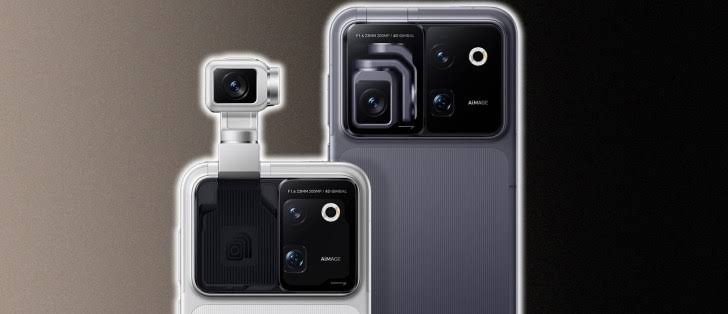
Honor has officially launched its long-teased Robot Phone in China, a flagship Android device built around a motorized 200-megapixel camera that rises from the back of the phone on a titanium gimbal. It can pan, tilt, rotate a full 360 degrees, and even dance to music through Honor's Yoyo AI assistant, turning what used to be a separate handheld gimbal accessory into a built-in phone feature.
Honor first teased the Robot Phone at its Magic8 series unveiling, and after months of leaks, teasers, and a prototype sighting at CES, the company finally took the wraps off the finished device in China. Starting at 9,999 yuan, roughly $1,375 to $1,480 depending on the exchange rate, the phone is aimed squarely at vloggers, livestreamers, and mobile filmmakers who might otherwise carry a separate gimbal alongside their phone.
The Gimbal: A Camera That Moves Like a Robot Arm
The centerpiece of the Robot Phone is its titanium gimbal camera system. A protective rear cover slides open, and the camera rises above the phone body before it can pan, tilt, and rotate to stabilize footage, track subjects, and automatically frame video calls and livestreams. According to Honor, the gimbal mechanism required more than 60 manufacturing processes, over 100 precision components, and is covered by more than 100 patents.
The titanium gimbal motor itself weighs just 2.6 grams and measures only 6mm thick, yet the entire mechanism fits inside the phone's 9.6mm body. Honor describes it as the industry's smallest 4D gimbal system, claiming it is roughly 65 percent smaller than traditional handheld gimbals like DJI's Osmo Pocket. Despite the mechanical complexity, the phone weighs 248 grams, noticeably heavier than a typical flagship.
Camera Specs: Two 200MP Sensors and a 50MP Ultrawide
The gimbal-mounted main camera uses a 200MP, 1/1.28-inch sensor with an f/1.6 aperture, optical image stabilization, and support for up to 4K video recording. It's paired with Honor's own H1 imaging chip, which handles the AI subject tracking and real-time auto-framing used during vlogging, livestreaming, and video calls.
The other two cameras sit in a more conventional fixed camera bump. A second 200MP sensor, this one 1/1.4-inch with an f/2.6 aperture, powers a periscope telephoto lens offering 2.7x optical zoom with its own optical stabilization. A 50MP ultrawide camera with a 122-degree field of view rounds out the system, giving the Robot Phone three genuinely different shooting perspectives without needing an external lens attachment.

ARRI Partnership: Cinema-Grade Color on a Phone
The Robot Phone is the first device to come out of a partnership between Honor and German cinema equipment brand ARRI. That partnership brings native Log-C3 video encoding and LUT color grading, processed entirely on the device, tools normally associated with dedicated cinema cameras rather than smartphones. Honor is positioning this as the phone's answer to serious mobile filmmakers who want professional color grading flexibility without exporting footage to a separate editing rig first.
Shooting Modes Built Around the Gimbal
Because the main camera can physically move rather than just crop digitally, Honor built a set of shooting modes that wouldn't make sense on a normal phone. These include a tilt lock mode, an FPV-style view, a dramatic spinning "spinshot" mode, a panorama mode, and a star assist feature designed to track stars across the sky for astrophotography and time-lapse footage. AI subject tracking keeps a moving subject centered in frame automatically, and voice commands let you tell the gimbal to "turn around" or "focus on a specific point" without touching the screen. Hands-free gesture control can also deploy the camera arm and trigger a shot.
Yoyo Robot Mode: More Than Just a Camera
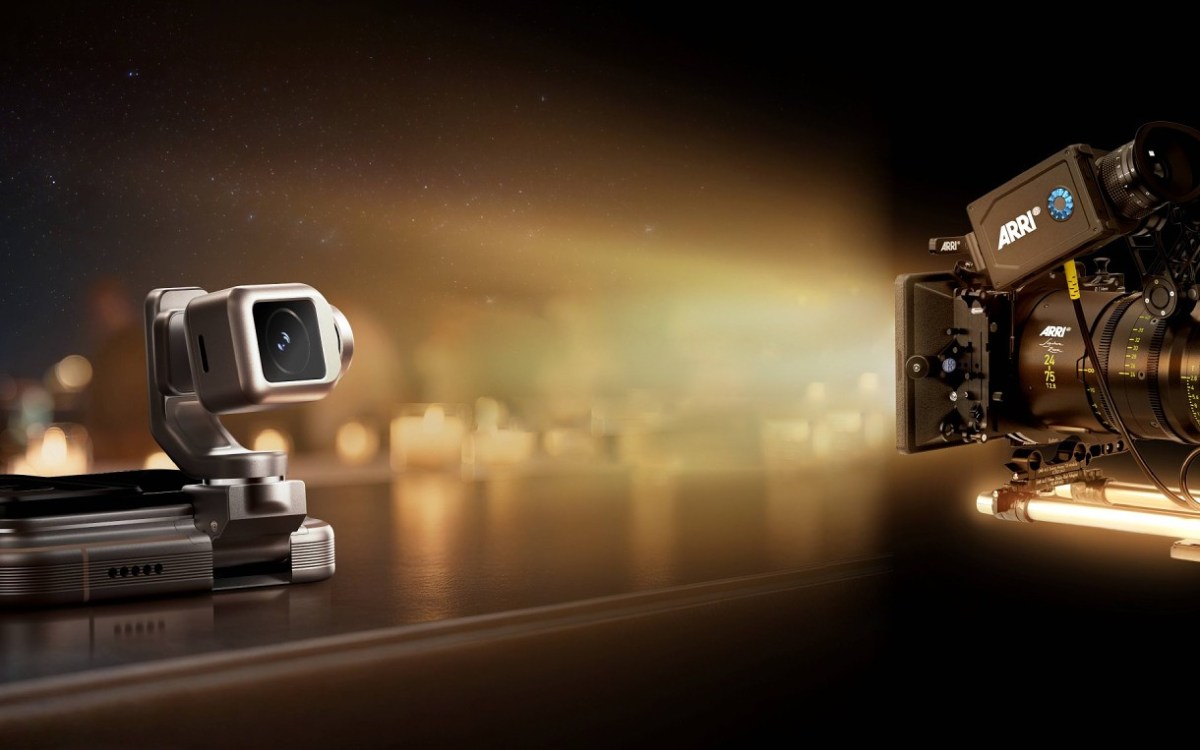
Honor doesn't just market the gimbal as a camera stabilizer, it's also framed as a robot companion powered by the company's Yoyo AI assistant. In Yoyo Robot Mode, the gimbal combines what Honor calls multimodal perception, contextual understanding, gesture recognition, and physical movement to react to its surroundings without direct commands. In demonstrations, the camera has nodded in response to questions, shaken its head, performed over 100 facial-style expressions, and even danced along to music.
Honor says it plans to open the platform to third-party developers, allowing them to build new experiences using the phone's gimbal, perception, and interaction capabilities, though specifics on that developer program have not yet been detailed.
Performance and Battery
Underneath the gimbal theatrics, the Robot Phone runs on a Qualcomm Snapdragon 8 Elite Gen 5 chipset, putting its everyday performance in line with other 2026 Android flagships. It's backed by a large 7,060mAh silicon-carbon battery, and Honor's split-charging technology is designed to let the phone charge and handle demanding tasks like gaming at the same time without added strain on the battery. The phone runs Honor's MagicOS software and includes an integrated metal unibody design with a curved edge finish, according to Honor's own product listing.
Price and Availability
The Honor Robot Phone is priced at 9,999 yuan in China, translating to roughly $1,375 to $1,480 depending on the exchange rate used, and became available starting August 18, 2026. As of this writing, Honor has not announced pricing, a release date, or carrier partnerships for markets outside China, so buyers elsewhere should not expect an imminent global launch.
Frequently Asked Questions
Conclusion
The Honor Robot Phone is one of the more genuinely unusual flagship launches of 2026, trading the conventional path of bigger sensors and better computational photography for an entirely mechanical solution to smartphone stabilization. Whether the gimbal proves to be a lasting feature or a one-generation experiment will likely come down to how well it holds up in daily use outside Honor's own demo videos, and whether the company brings it to markets beyond China at all.