
You don't need to spend $800 or $1,000 to get a good smartphone in 2026. The market for smartphones under $500 has become much more competitive. Phones in this price range can now offer 120Hz or faster AMOLED displays, capable cameras, 5G, large batteries, fast charging, and processors that can handle demanding apps and games.
Some even offer features that were previously reserved for expensive flagship phones, including long software support, advanced AI tools, optical zoom, and high-quality displays. However, choosing a phone under $500 isn't always easy. A phone may have a better processor but weaker cameras. Another may have a great camera but slower charging. Some offer huge batteries, while others provide much longer software support. That's why the cheapest phone isn't necessarily the right phone for everyone.
In this guide, we look at some of the most interesting smartphones under $500 in 2026, including the Google Pixel 10a, Nothing Phone (4a) Pro, Samsung Galaxy A37 5G, Samsung Galaxy A57 5G when discounted below $500, OnePlus Nord 6, Redmi Note 15 Pro 5G, HONOR X9d, and Motorola Moto G Power 2026.
Best Smartphones Under $500 in 2026 at a Glance
| Smartphone | Best For | Approx. Price | Battery | Main Camera |
|---|---|---|---|---|
| Google Pixel 10a | Camera and software | $499 | 5,100mAh | 48MP |
| Nothing Phone (4a) Pro | Display and design | $499 | 5,080mAh | 50MP |
| Samsung Galaxy A37 5G | Samsung experience | $449.99 | 5,000mAh | 50MP |
| Samsung Galaxy A57 5G | Premium mid-range features | Under $500 on sale ($549.99 launch) | 5,000mAh | 50MP |
| OnePlus Nord 6 | Performance and gaming | Around $450 | 7,500mAh | 50MP |
| Redmi Note 15 Pro 5G | Display and camera hardware | Around $470 | 6,580mAh | 200MP |
| HONOR X9d | Battery and durability | Around $370 | 8,300mAh | 108MP |
| Motorola Moto G Power 2026 | Low-cost battery phone | $299.99 | 5,200mAh | 50MP |
Prices vary by country, retailer, and promotions. Some models, especially the OnePlus Nord 6, HONOR X9d, and Redmi Note 15 Pro 5G, have more limited availability in the US but are sold in other regions.
1. Google Pixel 10a
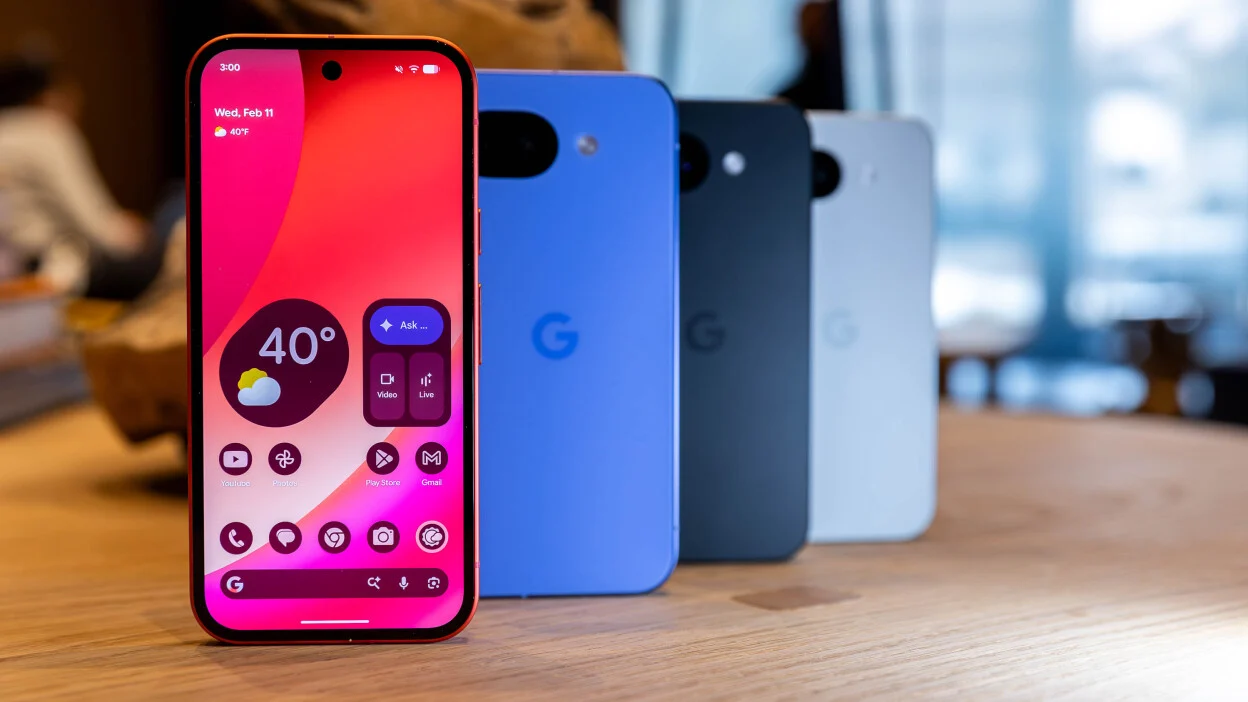
Best smartphones under $500 for camera and software support
The Google Pixel 10a is one of the easiest phones to consider if you want a balanced smartphone without spending much money. Google lists the Pixel 10a from $499 in the US, although the company is currently offering it for less during promotional periods. The Pixel 10a isn't designed to compete with expensive flagship phones on raw hardware; instead, Google focuses on the areas that matter for everyday use: camera processing, clean Android software, AI features, battery life, and long-term updates.
Key features
- 6.3-inch P-OLED display, up to 3,000 nits peak brightness
- 120Hz refresh rate
- Google Tensor G4
- 8GB RAM
- 128GB / 256GB storage
- 48MP main camera, 13MP ultra-wide camera
- 5,100mAh battery
- Wireless charging
- IP68/IP69 water and dust resistance
- Android 16
- Up to 7 years of OS and security updates
One of the biggest reasons to consider the Pixel 10a is its software support. Google's Pixel A-series strategy gives the phone a long update window, especially important if you plan to keep your phone for several years. The camera is another major reason to consider it: Google relies heavily on computational photography, so the phone can produce good results without needing a huge collection of camera sensors. Tom's Guide's current 2026 smartphone coverage also highlights the Pixel 10a as a strong budget option, particularly for photography and long battery life.
Who should buy the Pixel 10a?
The Pixel 10a makes sense if you want a good everyday camera, clean Android software, long software support, useful Google AI features, IP68 protection, and a compact flagship-style phone. It's less interesting if your priority is extremely fast charging or high-end gaming performance.
2. Nothing Phone (4a) Pro
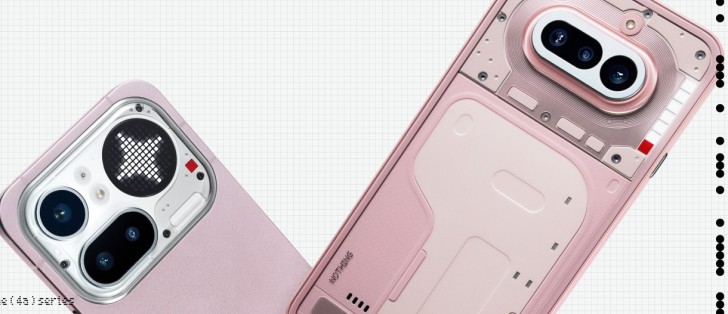
Best for display, design, and zoom
The Nothing Phone (4a) Pro takes a different approach. Instead of trying to look like every other mid-range Android phone, Nothing gives the phone a distinctive design and focuses heavily on its display, cameras, and software experience. Nothing's US store lists the 8GB/128GB model at $499. The phone features a 6.83-inch AMOLED display and Snapdragon 7 Gen 4 processor, plus a 5,080mAh battery and a camera system with a dedicated telephoto lens.
Key features
- 6.83-inch AMOLED display
- 144Hz refresh rate
- Snapdragon 7 Gen 4
- 8GB / 12GB RAM depending on configuration
- 128GB / 256GB storage
- 50MP main camera, dedicated telephoto camera
- 5,080mAh battery
- Fast wired charging
- Nothing OS, Glyph interface
One of the more unusual features is the company's emphasis on zoom: Nothing advertises up to 140x Ultra Zoom on the Phone (4a) Pro, though extreme digital zoom shouldn't be confused with true optical zoom quality. The phone is also interesting for people who want a fast display, since a 144Hz panel can make scrolling and supported games feel smoother than a standard 60Hz screen.
Who should buy it?
Consider the Nothing Phone (4a) Pro if you want a distinctive design, a fast AMOLED display, good everyday performance, a large battery, dedicated zoom hardware, Nothing OS, and a phone that looks different from typical Samsung and Google devices.
3. Samsung Galaxy A37 5G
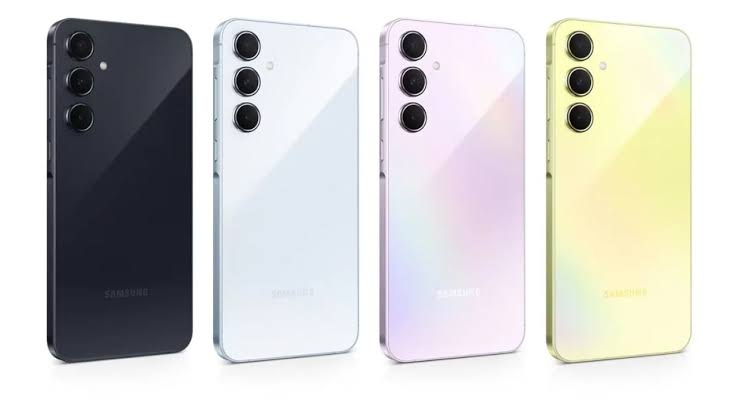
Best Samsung phone comfortably under $500
Samsung's Galaxy A37 5G is another important option in the sub-$500 market. Samsung launched the Galaxy A37 5G at $449.99 in the US on March 25, 2026, putting it directly inside this budget. It's designed for people who want the Samsung experience without paying flagship Galaxy S-series prices.
Key features
- 6.7-inch Super AMOLED display
- 120Hz-class smooth display experience
- Exynos 1480
- 5G
- 50MP main camera, ultra-wide camera, macro camera
- 5,000mAh battery, up to 45W charging
- Samsung One UI
- IP68 protection
- Long-term software support
The A37 is particularly interesting for people already using Samsung products. You get access to Samsung's software ecosystem, Galaxy AI-related features, and Samsung's security platform without moving into the four-figure flagship category. The phone also provides IP68 protection, useful for people who want additional resistance against water and dust.
What makes it different?
Samsung's biggest advantage here is the complete package: a familiar Android interface, a large AMOLED display, 5G, a large battery, and a well-established ecosystem. It may not have the fastest processor in this list, but it's designed for everyday use rather than chasing benchmark records.
4. Samsung Galaxy A57 5G
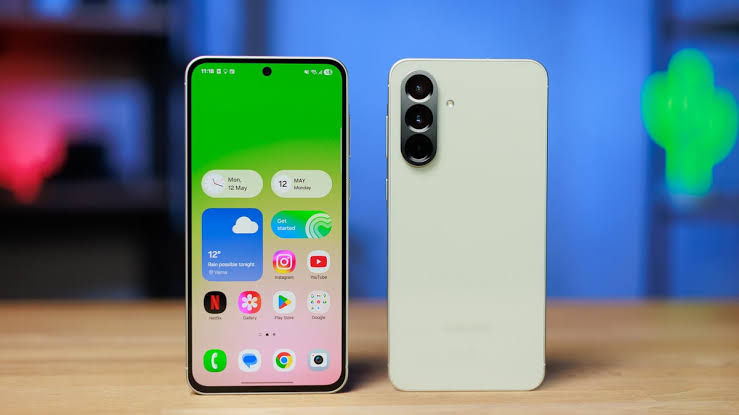
Best Samsung option when discounted below $500
The Galaxy A57 5G is technically above our $500 limit at its normal US launch price. Samsung launched the 128GB model at $549.99, but Samsung's current US store has offered it below $500 during promotions, making it worth mentioning for anyone shopping during a sale. The A57 has a 6.7-inch FHD+ Super AMOLED display, an Exynos 1680 processor, a 5,000mAh battery, and a triple-camera system led by a 50MP OIS main camera.
Key features
- 6.7-inch Super AMOLED display
- 120Hz-class smooth display experience
- Exynos 1680
- 50MP OIS main camera, 12MP ultra-wide, 5MP macro
- 12MP front camera
- 5,000mAh battery
- 45W-class Super Fast Charging 2.0
- IP68
- Up to six OS upgrades and six years of security updates
Samsung says the A57 can receive up to six generations of OS upgrades and six years of security updates. That's important because a mid-range phone can become expensive in the long run if it stops receiving security updates after only a few years.
Should you consider it?
Yes, but check the actual price. If the A57 is selling above $500, it no longer strictly belongs in a "smartphones under $500" list. If a retailer or Samsung promotion brings the 128GB model below $500, however, it becomes a much more interesting option.
5. OnePlus Nord 6
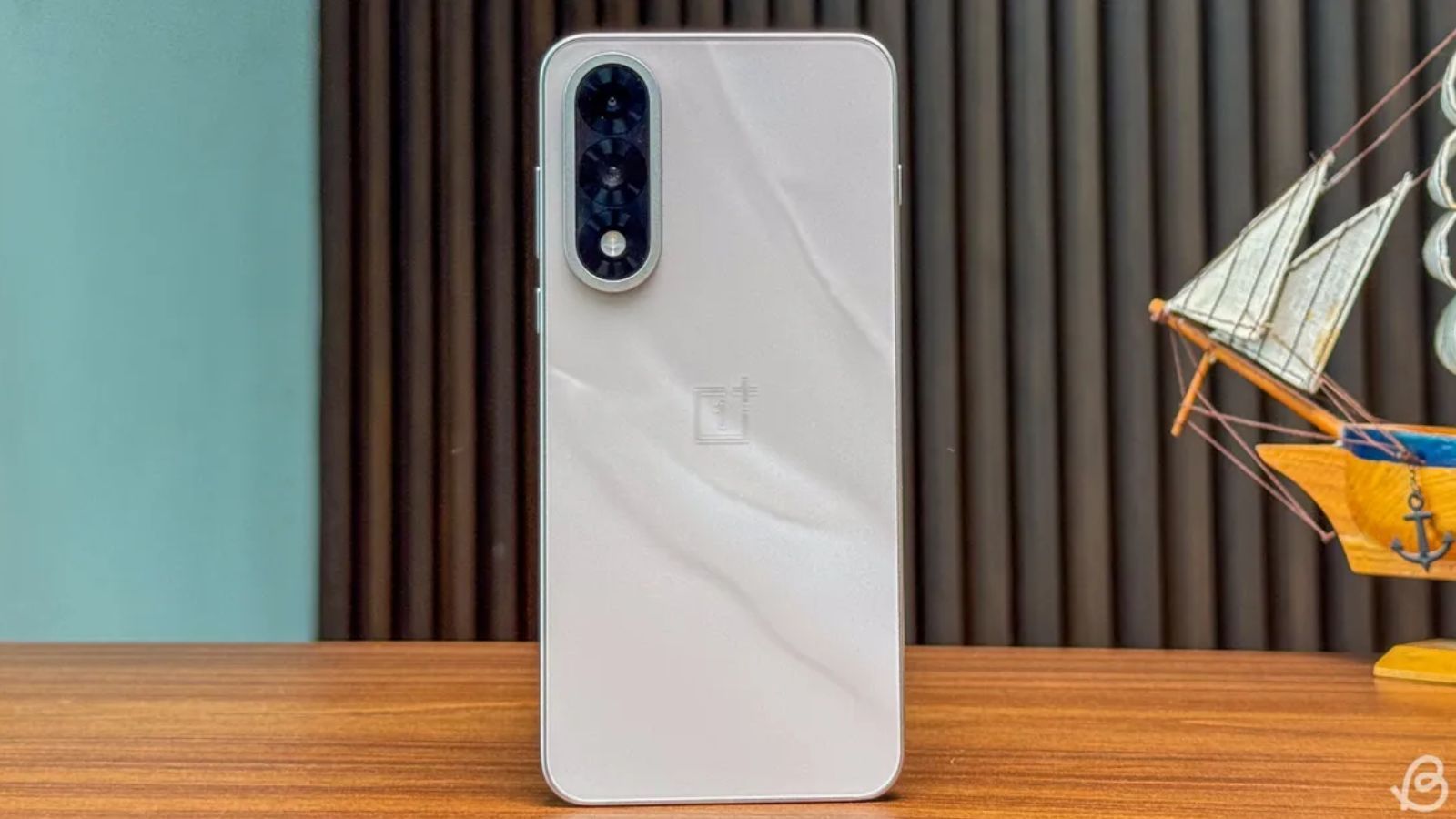
Best for performance and battery life
The OnePlus Nord 6 is one of the most interesting phones for people who care about performance. OnePlus gives it a Snapdragon 8-series processor, a 165Hz AMOLED display, and an enormous 7,500mAh battery, and the company also advertises stable 165fps PUBG gaming in supported scenarios.
Key features
- 165Hz AMOLED display
- Snapdragon 8-series platform
- 7,500mAh battery, 80W charging
- 50MP Sony main camera with dual-axis OIS
- 32MP front camera
- 4K 60fps video
- IP66/IP68/IP69/IP69K protection
The battery is probably its most impressive feature. OnePlus says the 7,500mAh battery can provide more than 2.5 days of power under its stated testing conditions and supports 80W charging. The display is also unusually fast for this price class, with a 165Hz refresh rate useful for supported games and making animations and scrolling feel extremely smooth.
Who is it for?
The Nord 6 is worth considering if your priorities are gaming, battery life, fast charging, high refresh rate, performance, and a large display. The main issue is availability: OnePlus sells the Nord 6 in several international markets, but it isn't positioned as a mainstream US phone. If you're buying from a market where the Nord 6 is officially or reliably available, that makes it a much more relevant option.
6. Redmi Note 15 Pro 5G
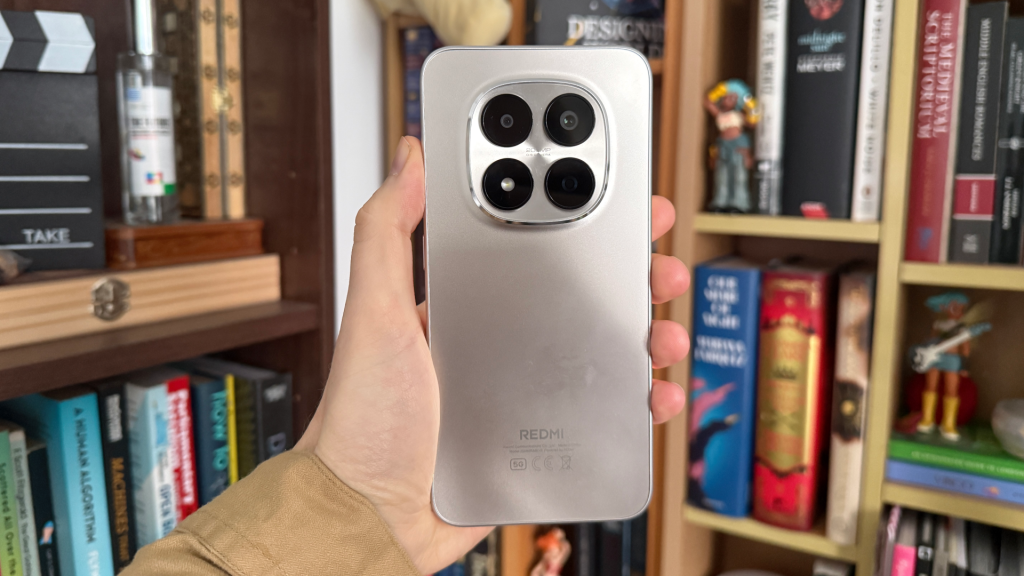
Best for display and camera hardware
The Redmi Note series has become one of the most competitive families in the mid-range market. The Redmi Note 15 Pro 5G combines a high-resolution camera, a large battery, and a high-quality display while staying around the $500 range in many markets. TechRepublic lists the Redmi Note 15 Pro 5G at around $473, with a 6,580mAh battery and 200MP main camera.
Key features
- 5G
- AMOLED display, high refresh rate
- 200MP main camera
- 6,580mAh battery, fast charging
- Large storage options
- Android-based HyperOS
The 200MP camera is one of the phone's biggest headline specifications, but it's important not to assume that 200MP automatically means better photos; sensor size, image processing, stabilization, aperture, and software all influence the final image. The large battery is also useful for people who spend a lot of time watching videos, using social media, or playing games.
Who should consider it?
The Redmi Note 15 Pro 5G is particularly interesting if you want a large display, high-resolution camera hardware, a large battery, 5G, fast charging, and lots of storage. Availability and exact pricing can vary significantly between countries, so check your local retailer before buying.
7. HONOR X9d
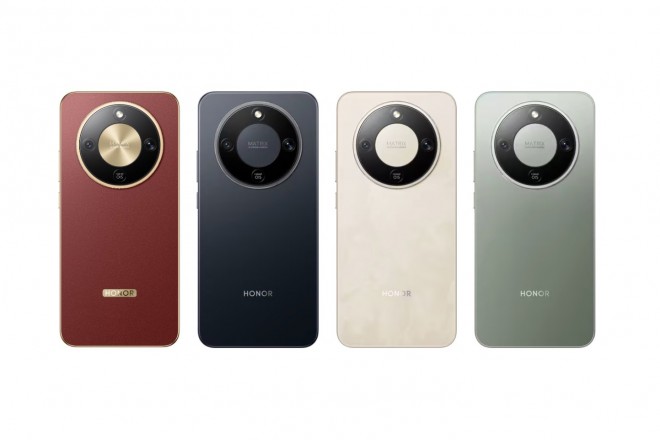
Best for battery life and durability
If battery life is your biggest priority, the HONOR X9d deserves attention. The phone packs an enormous 8,300mAh battery, considerably larger than what you normally find in mainstream mid-range smartphones. TechRepublic lists the X9d at around $373 in the Middle East and other international markets.
Key features
- 8,300mAh battery
- 108MP main camera
- 256GB storage
- Large display
- 5G
- Durable design
- MagicOS
The huge battery is the main reason to look at this phone, particularly useful for people who travel frequently, spend long periods away from a charger, or use their phone heavily throughout the day. The trade-off is that HONOR doesn't have the same availability in every market as Samsung, Google, or Motorola.
Who should buy it?
The X9d is worth considering if you care most about battery life, durability, large storage, a big screen, and long periods away from a charger.
8. Motorola Moto G Power (2026)
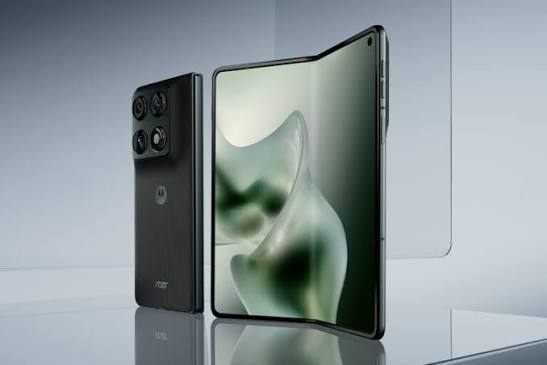
Best for a tighter budget
You don't have to spend close to $500 to get a useful phone in 2026. The Motorola Moto G Power 2026 is listed at $299.99, making it one of the more affordable options in this guide. It comes with a 5,200mAh battery and a 50MP main camera.
Key features
- 5,200mAh battery
- 50MP main camera
- 128GB storage
- 5G
- Large display
- Motorola Android software
The Moto G Power isn't designed to compete with the Nord 6 or Pixel 10a in every category. Instead, it's for people who want to spend considerably less while still getting the basics right: WhatsApp, YouTube, TikTok, Instagram, Google Maps, web browsing, streaming, casual gaming, and school and work apps. If you don't need flagship-level cameras or gaming performance, spending $300 rather than $500 can leave a significant amount of money in your pocket.
Smartphones Under $500: What Should You Look For?
Choosing a phone under $500 requires more than comparing the number printed beside the camera. Here are the specifications that matter most.
1. Processor
The processor affects almost everything: gaming performance, app loading, camera processing, AI features, battery efficiency, multitasking, and how long the phone remains usable. For heavy gaming, phones such as the OnePlus Nord 6 deserve attention because of their Snapdragon 8-series platform. For everyday use, however, you don't necessarily need the fastest processor available; a well-optimized mid-range chip can handle normal tasks without problems.
2. Display
A good display can make a mid-range phone feel much more expensive. Look for OLED or AMOLED technology, 90Hz or 120Hz refresh rate, good outdoor brightness, Full HD+ resolution, and HDR support where available. Some phones in this category now go beyond 120Hz: the Nothing Phone (4a) Pro reaches 144Hz, while the OnePlus Nord 6 reaches 165Hz. However, higher refresh rates can consume more power, and not every app or game will use the maximum refresh rate.
3. Camera Quality
Don't choose a phone simply because it has a 108MP or 200MP camera. A 50MP camera with a good sensor and strong image processing can produce better results than a higher-megapixel camera with weaker hardware. Pay attention to sensor size, OIS, aperture, image processing, ultra-wide quality, telephoto availability, night photography, and video recording. The Pixel 10a is a good example of why software matters, since Google's computational photography helps it compete with phones that have more camera hardware.
4. Battery and Charging
Battery capacity matters, but it isn't everything. A 5,000mAh phone can sometimes last longer than a 6,000mAh phone if it has a more efficient processor, better software optimization, and a less demanding display. Still, there are some very large batteries in this category: the OnePlus Nord 6 has 7,500mAh, while the HONOR X9d reaches 8,300mAh. Charging speed also matters; if you regularly forget to charge your phone overnight, a fast-charging phone can be much more convenient.
5. Software Updates
This is one of the easiest things to overlook when buying a budget phone. A phone may look cheap today, but replacing it after two or three years can make it more expensive in the long run. Google and Samsung have made long-term support a major part of their mid-range strategies; Samsung says the Galaxy A57 receives up to six OS upgrades and six years of security updates, and the Pixel A series is also known for long software support. Therefore, if you plan to keep your phone for five or more years, update policy should be near the top of your checklist.
Are Smartphones Under $500 Good Enough for Gaming?
Yes, but it depends on the game. Casual games such as Subway Surfers, Candy Crush, Clash Royale, Mobile Legends, PUBG Mobile, and Call of Duty Mobile can run well on many phones in this price range. More demanding games are where the differences become clearer. If gaming is your priority, look for a strong Snapdragon or Dimensity processor, a high refresh-rate display, good cooling, a large battery, fast charging, a high touch sampling rate, and bypass charging if available. The OnePlus Nord 6 is particularly focused on gaming and advertises 165fps PUBG gaming in supported scenarios, though that doesn't mean every game will run at 165fps; game support, graphics settings, temperature, and software optimization still matter.
Which Smartphone Under $500 Is Best for Cameras?
Camera needs vary. The Pixel 10a is particularly interesting for people who want strong point-and-shoot photography and Google's image processing. The Nothing Phone (4a) Pro is more interesting if you want a dedicated zoom camera and a more unusual camera setup. The Redmi Note 15 Pro 5G attracts buyers who want a very high-resolution 200MP main camera. Samsung's Galaxy A57 5G also provides a balanced triple-camera system with a 50MP OIS main camera, 12MP ultra-wide, and 5MP macro camera. Rather than asking which phone has the highest megapixel count, decide whether you care more about portraits, night photography, zoom, video, or simple point-and-shoot photos.
Which Smartphone Under $500 Has the Best Battery?
The answer depends on whether you care about battery capacity or actual endurance. Phones such as the HONOR X9d and OnePlus Nord 6 have exceptionally large batteries: the HONOR X9d has an 8,300mAh battery, while the Nord 6 has 7,500mAh. For a more mainstream option, the Pixel 10a has a 5,100mAh battery, and Samsung's A57 and A37 use 5,000mAh batteries. Remember that real-world battery life depends on your usage; gaming, 5G, high brightness, and high refresh rates can all increase power consumption.
Which Smartphone Under $500 Is Best for Long-Term Use?
Software support is especially important here. Google's Pixel 10a is designed around long-term software support, while Samsung's A57 offers up to six OS upgrades and six years of security updates. That makes these phones interesting for people who don't want to replace their smartphone every two or three years. Before buying any phone for long-term use, check the manufacturer's current update policy for your exact model and region.
Should You Spend the Full $500?
Not necessarily. One of the biggest mistakes people make is assuming that spending more automatically gives them a better phone. A $300 phone may already handle everything you need; if you mainly use WhatsApp, YouTube, Instagram, browsing, and banking apps, you may not need the extra performance offered by a $450 to $500 device. On the other hand, spending closer to $500 can make sense if you want better cameras, longer software support, faster performance, better displays, faster charging, more storage, or better gaming performance. The important thing is to match the phone to your actual usage.
What About an Older Flagship Under $500?
This is another option worth considering. An older flagship can sometimes provide better camera hardware, a faster processor, wireless charging, better materials, stronger speakers, and more advanced displays. However, there are disadvantages: older flagships may have shorter remaining software support, smaller batteries, higher repair costs, less efficient processors, or used or refurbished condition. If you're considering an older flagship, check the remaining software support and battery health before buying. A new $450 mid-range phone with six or seven years of updates can sometimes make more sense for a long-term buyer than a three-year-old flagship with only a short support period remaining.
People Also Ask
Conclusion
The market for smartphones under $500 is stronger than it has been in previous years. You can now find phones with fast AMOLED displays, large batteries, capable cameras, 5G connectivity, and long software support without moving into flagship pricing. The Google Pixel 10a is particularly interesting for people who care about photography and long-term software support. The Nothing Phone (4a) Pro stands out with its distinctive design, fast display, and zoom-focused camera system. The Samsung Galaxy A37 5G provides a more affordable way into Samsung's ecosystem, while the Galaxy A57 5G becomes relevant when a promotion brings it below the $500 mark.
The OnePlus Nord 6 is a strong option for people who prioritize gaming, performance, battery life, and fast charging. The Redmi Note 15 Pro 5G focuses heavily on camera hardware, display, and battery capacity, while the HONOR X9d is aimed at buyers who want an exceptionally large battery. And if you simply want to spend less, the Motorola Moto G Power 2026 shows that you don't need to use the entire $500 budget to get a useful everyday smartphone.
Before buying, look beyond the price tag. Check the processor, display, camera quality, battery, charging speed, software support, and availability in your country. Most importantly, think about what you actually do with your phone. If you take lots of photos, prioritize the camera. If you play demanding games, prioritize performance and cooling. If you keep your phone for years, prioritize software support. If you travel frequently, a large battery may be more useful than an extra camera sensor. There's no reason to spend $1,000 on a smartphone simply because flagship phones exist. In 2026, $500 is enough to get a capable smartphone for most people, and the right choice depends on which features matter most to you.