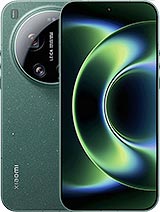
The battery differs by market: GSMArena lists 5,000mAh for the global model and 5,300mAh for the China-only model. Network bands also differ between International and China versions.
| Announced | February 22, 2024 (China) |
| Released | February 22, 2024 |
| Global launch | At MWC 2024 (February 25, 2024 event) |
| Technology | GSM / CDMA / HSPA / EVDO / LTE / 5G |
| 2G bands | GSM 850 / 900 / 1800 / 1900; CDMA 800 |
| 3G bands | HSDPA 800 / 850 / 900 / 1700 (AWS) / 1900 / 2100; CDMA2000 1xEV-DO |
| 4G bands (International) | 1, 2, 3, 4, 5, 7, 8, 18, 19, 20, 26, 28, 38, 40, 41, 42, 48, 66 |
| 4G bands (China) | 1, 3, 4, 5, 7, 8, 18, 19, 26, 28, 34, 38, 39, 40, 41, 42, 48, 66 |
| 5G bands (International) | 1, 2, 3, 5, 7, 8, 20, 28, 38, 40, 41, 48, 66, 77, 78, 79 (SA / NSA) |
| 5G bands (China) | 1, 3, 5, 7, 8, 28, 38, 40, 41, 48, 66, 77, 78, 79 (SA / NSA) |
| Speed | HSPA, LTE, 5G |
| Dimensions | 161.4 x 75.3 x 9.2 mm |
| Weight | 219.8 g, 224.4 g or 229.5 g (depends on the back and frame) |
| Build | Glass front (Xiaomi Shield Glass), glass back or silicone polymer (eco leather) back, titanium (grade 5) or aluminum alloy frame |
| SIM | Nano-SIM + Nano-SIM |
| Water and dust resistance | IP68 (up to 1.5 m for 30 minutes) |
| Type | LTPO AMOLED, 68B colors, 120Hz, 1920Hz PWM, Dolby Vision, HDR10+ |
| Size | 6.73 inches |
| Resolution | 1440 x 3200 pixels (~522 ppi) |
| Brightness | 1,000 nits (typical), 3,000 nits (peak) (as listed) |
| Protection | Xiaomi Shield Glass (global); Xiaomi Longjing Glass is listed for other versions |
| OS | Android 14, HyperOS; up to 4 major Android upgrades listed |
| Chipset | Qualcomm SM8650-AB Snapdragon 8 Gen 3 (4 nm) |
| GPU | Adreno 750 |
| Configurations (China) | 12GB + 256GB, 16GB + 512GB, or 16GB + 1TB |
| Main | 50 MP, 1-inch type (Sony LYT-900), variable aperture f/1.63 to f/4.0 |
| Ultrawide | 50 MP |
| Telephoto | 50 MP, about 3.2x optical zoom |
| Periscope telephoto | 50 MP, 5x optical zoom |
| Features | Leica optics |
| Front | 32 MP, f/2.0, 22mm (wide), 1/3.14", 0.7µm |
| Capacity | 5000 mAh on the global model; 5300 mAh on the China-only model |
| Wired Charging | 90W |
| Wireless | 80W on the China model (Android Central); the global figure was not confirmed |
| China launch price (12GB + 256GB) | ¥6,499 (Android Central) |
| China launch price (16GB + 512GB) | ¥6,999 (Android Central) |
| China launch price (16GB + 1TB) | ¥7,799 (Android Central) |
| Global price | Varies by region; an official global price was not confirmed from the sources used |
Prices are provided for reference and may change over time. Actual prices vary by region, retailer, storage configuration, taxes, and promotions. Check with local retailers for the latest price.
This is an editorial analysis of the specifications listed on this page. It is not based on SpecHub lab testing, so it makes no claims about benchmarks, battery life or camera results. Manufacturer lab figures are not reproduced here.
The Xiaomi 14 Ultra was announced and released in China on February 22, 2024 and reached global markets at MWC 2024. It is the camera-focused model of the Xiaomi 14 series, with a 6.73-inch LTPO AMOLED display, the Snapdragon 8 Gen 3 chipset and a four-camera Leica system built around a 1-inch main sensor.
GSMArena lists two versions: a global model with a 5,000mAh battery and a China-only model with 5,300mAh. Network bands differ too, so check the exact version before buying. Xiaomi also offered a Titanium Special Edition in China with two-way satellite communication, according to 9to5Google.
The chipset is the Qualcomm Snapdragon 8 Gen 3 (SM8650-AB, 4 nm) with an Adreno 750 GPU. Chinese launch coverage lists up to 16GB of RAM and up to 1TB of storage, in 12GB + 256GB, 16GB + 512GB and 16GB + 1TB versions. SpecHub has not run benchmarks, so no performance claim is made here.
The display is a 6.73-inch LTPO AMOLED at 1440 x 3200 pixels (about 522 pixels per inch) with a 120Hz refresh rate, 1920Hz PWM dimming, Dolby Vision and HDR10+. GSMArena lists 1,000 nits typical and 3,000 nits peak brightness, which are listed figures and not SpecHub measurements.
The front uses Xiaomi Shield Glass on the global model, which Xiaomi says is 10 times more drop resistant according to 9to5Google, a manufacturer claim that SpecHub has not tested.
The rear system has four 50MP cameras with Leica optics: a 1-inch type Sony LYT-900 main sensor with a variable aperture from f/1.63 to f/4.0, an ultrawide, a 3.2x telephoto and a 5x periscope telephoto. The 32MP front camera has an f/2.0 lens.
Other camera details, such as video modes and the exact apertures of the secondary cameras, were not confirmed from reliable sources and are not listed. SpecHub has not tested photo or video quality.
The global model has a 5,000mAh battery and the China-only model 5,300mAh. Wired charging is 90W. Android Central lists 80W wireless charging for the China launch, while the global wireless figure was not confirmed. SpecHub has not run battery-life tests, so no endurance claim is made here.
The phone launched with Android 14 and HyperOS, and GSMArena lists up to 4 major Android upgrades. It has IP68 dust and water resistance and dual Nano-SIM support. Wi-Fi and Bluetooth versions were reported only in pre-launch leaks and are not listed here.
People who want a camera-focused flagship with a 1-inch variable-aperture main sensor and two telephoto lenses will find the most to like.
Buyers who want a newer chipset, the longest software support or the larger China battery may prefer the Xiaomi 15 Ultra, Xiaomi 17 Ultra or the China model. Buyers who want a smaller, lighter phone need a different device.
On paper, the 14 Ultra is a camera-first flagship with four 50MP cameras, a bright 2K LTPO screen and 90W charging, with a battery that is smaller on global models. It is best suited to people who value camera hardware.
Camera Flagship
Camera Flagship
Flagship