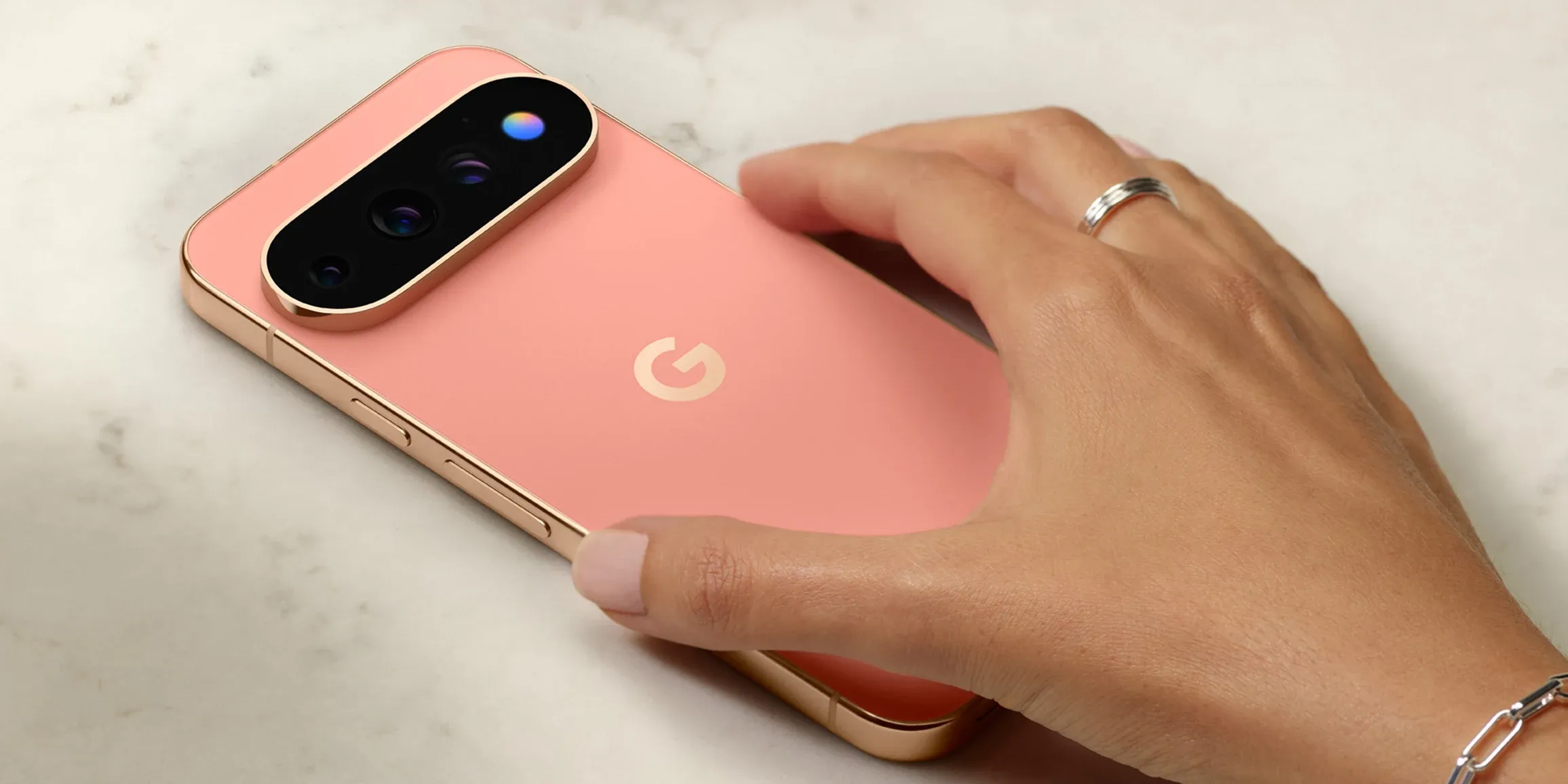
Our Pixel 11 Pro review unit arrived the week of launch, and our testing period is now complete. After weeks of daily use, camera comparisons, and battery cycles, alongside the broader wave of independent testing that's landed across the industry since, a clear picture has formed: this is a genuinely better phone than the Pixel 10 Pro in most everyday ways, held back mainly by a graphics chip that still can't keep pace with Snapdragon rivals and a base RAM configuration that took a step backward.
The Pixel 11 Pro launched alongside the rest of Google's Pixel 11 lineup on August 20, 2026, built around the new Tensor G6 chipset and a heavier focus on Gemini-powered AI features than any Pixel before it. Below is our full breakdown of the design, display, cameras, performance, and battery life, along with who should actually buy it.
Quick Verdict
The Pixel 11 Pro is an easy recommendation if you're upgrading from a Pixel 9 or earlier, or from any non-Pixel phone that prioritizes camera quality and clean software over peak gaming performance. The telephoto camera is meaningfully better than last year's, the new modem fixes a long-standing Pixel weak spot, and the phone comfortably lasts a full day. It's a harder sell for existing Pixel 10 Pro owners, who won't see enough of a jump to justify upgrading, and for anyone who games heavily, since the Tensor G6's graphics performance remains a clear step behind the Snapdragon 8 Elite Gen 5 phones it competes with at the same price.
What's in the Box
Consistent with recent Pixel launches, the retail box includes the phone itself, a USB-C to USB-C cable, basic documentation, and a SIM ejector tool. There's no charging brick included, so if you don't already own a compatible USB-C PD charger or a Qi2 wireless charging pad, budget for one separately before your phone arrives.
Design and Build
The Pixel 11 Pro measures 152.7 x 71.9 x 8.4mm and weighs 204 grams, with a glass front and back panel, both Gorilla Glass Victus 2, wrapped in an aluminum frame. It carries an IP68 rating for dust and water resistance, in line with what you'd expect from a phone at this price. The redesigned camera bar carries over Google's now-familiar visual language, and in daily use the phone feels dense but well balanced in hand. On the Pro and Pro XL specifically, that camera bar also houses HiLight, a ring of RGB LEDs that glows to signal an incoming call or an active Gemini session when the phone is face down. It's a neat idea on paper, but in practice it only works in one specific orientation and doesn't tell you much a normal notification light couldn't already, and it was one of the few features in our testing that didn't earn its keep.
Display
The 6.30-inch LTPO OLED display is one of the best parts of the phone. It runs at 1280 x 2856 resolution, working out to roughly 497 pixels per inch, with HDR10+ support, 2,400 nits of brightness for everyday HDR content, and a peak of 3,600 nits. The LTPO panel drops its refresh rate as low as 1Hz for static content while still hitting a smooth 120Hz for scrolling or gaming, which helps battery life without any visible trade-off. Outdoor testing confirmed Google's brightness claims hold up in direct sunlight, and indoor color accuracy matches what we've come to expect from Pixel's Pro-tier displays.
Performance: Tensor G6
The Tensor G6 is a genuine step up for everyday tasks. Independent Geekbench 6 testing has shown gains in the range of 15 to 21% for both single-core and multi-core performance over the Pixel 10 Pro, and in our own use, apps opened quickly, multitasking stayed smooth, and the phone rarely got more than mildly warm during normal use. A new MediaTek M90 modem, replacing the Exynos modem used in past Tensor chips, also delivered a clear real-world improvement: the Pixel 11 Pro held onto 5G connections longer, downloaded faster, and used less battery on cellular data than the Pixel 10 Pro in side-by-side testing, addressing a complaint that's followed Pixel phones for years.
Graphics performance is the clear weak point. The Tensor G6's GPU has landed roughly 30 to 50% behind Qualcomm's Snapdragon 8 Elite Gen 5 in gaming benchmarks published since launch, and it lacks support for some newer Vulkan graphics features, which causes a handful of demanding titles to automatically disable their highest graphics settings. In practice, this means everyday use and Gemini-powered features feel fast, but starting up a demanding game makes the Tensor G6's limits obvious quickly. Storage and RAM configurations also shifted this generation: the 256GB base model now ships with 12GB of RAM, down from 16GB on last year's Pixel 10 Pro, with 16GB only available on the 512GB and 1TB storage tiers.
Cameras
The Pixel 11 Pro's main camera is unchanged from last year, a 50MP sensor at 1/1.3 inches with an f/1.68 aperture, dual-pixel PDAF, laser autofocus, and optical stabilization, and it remains one of the best in its class. The 48MP ultrawide is also carried over unchanged. The real hardware upgrade is the telephoto: it moves to a larger 1/1.95-inch sensor, up from 1/2.51 inches last year, letting in about 30% more light. That telephoto camera now supports Portrait Mode at its native 5x zoom for the first time, and reaches up to 120x with Google's AI-assisted Pro Res Zoom, up from 100x on the Pixel 10 Pro. The 42MP selfie camera is also new this year, with a wide 17mm field of view that fits more people into a group shot without needing to hold the phone at arm's length.
Software adds real value here too. Night Sight now captures at roughly 4.5 times the speed of previous Pixel phones, making handheld low-light shots far less of a waiting game, and Magic Capture, a new Gemini-powered mode, automatically identifies and saves the best moment from a burst without requiring perfectly timed shutter taps. Between the improved telephoto, faster Night Sight, and Magic Capture, this is a meaningful camera upgrade for anyone coming from a Pixel 9 or earlier, even though the main and ultrawide sensors themselves didn't change.
Software and AI
The Pixel 11 Pro ships with Android 17 out of the box, backed by Google's standard seven years of OS, security, and Pixel Drop updates. Beyond Magic Capture and Camera Looks, a new stylized photo-editing tool, Google introduced Rambler, a new on-device voice-to-text model, and Gemini Proactive Assistance, which tries to surface helpful suggestions before you ask by cross-referencing your calendar, messages, and contacts. Rambler's accuracy held up well in dictation-heavy testing, but Proactive Assistance is a mixed bag so far, occasionally useful but without yet finding a feature that feels essential enough to justify the added background data access it requires.
Battery and Charging
The Pixel 11 Pro packs roughly a 4,850mAh battery, and in our testing it comfortably cleared a full day of mixed use, including camera testing and benchmark runs, without needing a top-up before evening. Charging is handled by 30W wired, which Google says reaches 75% in about 30 minutes, and 25W Qi2.2 wireless charging, roughly 29% faster than the Pixel 10 Pro's wireless speeds. Neither number is class-leading against the fastest-charging Android flagships, but combined with the Tensor G6's improved efficiency, day-to-day battery anxiety wasn't something we ran into.
Pixel 11 Pro vs. Pixel 10 Pro
| Spec | Pixel 11 Pro | Pixel 10 Pro |
|---|---|---|
| Chipset | Tensor G6 | Tensor G5 |
| Modem | MediaTek M90 | Exynos modem |
| Base RAM (entry storage) | 12GB | 16GB |
| Telephoto Sensor | 1/1.95", up to 120x zoom | 1/2.51", up to 100x zoom |
| Wireless Charging | 25W Qi2.2 | Slower Qi2 |
| Starting Price | $1,099 | $999 |
Pros and Cons
| Pros | Cons |
|---|---|
| Telephoto camera is a genuine upgrade, with Portrait Mode at 5x and sharper zoom up to 120x | Graphics performance remains 30-50% behind Snapdragon 8 Elite Gen 5 rivals |
| New MediaTek M90 modem noticeably improves 5G connection quality and battery use | Base 256GB model drops to 12GB RAM, down from 16GB last generation |
| Bright, sharp 6.30" LTPO display with confirmed 3,600-nit outdoor visibility | $100 price increase over the Pixel 10 Pro |
| Comfortable full-day battery life with faster 25W Qi2.2 wireless charging | HiLight feels like a gimmick rather than a meaningful upgrade |
Who Should Buy the Pixel 11 Pro (and Who Should Skip It)
The Pixel 11 Pro makes the most sense for Pixel 9 owners or anyone switching from another brand who wants a smaller flagship with a genuinely improved telephoto camera, better connectivity, and Google's clean software experience. If mobile gaming is a big part of how you use your phone, it's worth trying a Snapdragon-powered rival in person first, since the performance gap in demanding games is noticeable rather than theoretical.
If you already own a Pixel 10 Pro, there isn't enough here to justify upgrading; the camera and modem gains are real but incremental. And if you don't specifically need the Pro's telephoto reach or the larger ultrawide sensor, the standard Pixel 11 uses the same chip and a similarly upgraded main camera for $200 less, without HiLight, a feature this review didn't find much use for anyway.
People Also Ask
Conclusion
The Pixel 11 Pro is a phone of real, specific upgrades rather than a wholesale reinvention: a better telephoto camera, a modem that finally fixes Pixel's long-standing connectivity complaints, and enough everyday performance improvement to feel snappier without sacrificing battery life. What holds it back from an easy top recommendation is the same story affecting the rest of the lineup, a graphics chip still clearly behind Snapdragon rivals, a base RAM configuration that took a step back, and a $100 price increase that isn't fully matched by what's new. For most buyers who don't specifically need its Pro-only camera hardware, the standard Pixel 11 is now the harder phone to argue against. For the full picture across the entire lineup, see our Pixel 11 series comparison.