Editorial Overview
This is an editorial analysis of the specifications listed on this page. It is not based on SpecHub lab testing, so it makes no claims about benchmarks, battery life or camera results. Manufacturer lab figures are not reproduced here.
Phone Overview
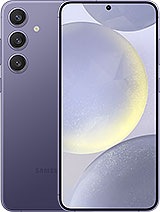
The Samsung Galaxy S24+ was announced on January 17, 2024 and released on January 24, 2024. It sits between the standard Galaxy S24 and the S24 Ultra, with a 6.7-inch LTPO AMOLED 2X display, 12GB of RAM, an aluminum frame and a triple rear camera led by a 50MP main sensor.
The most important regional difference is the chipset. GSMArena lists the Exynos 2400 for International models and the Snapdragon 8 Gen 3 for USA, Canada and China models. The two chips have different CPU layouts and GPUs, so check the model number (SM-S926B, SM-S926U, SM-S9260 and others) before buying.
Performance and Processor
The Snapdragon version has eight cores (one 3.39GHz Cortex-X4, three 3.1GHz Cortex-A720, two 2.9GHz Cortex-A720 and two 2.2GHz Cortex-A520) with an Adreno 750 GPU at 1GHz. The Exynos 2400 version has ten cores (one 3.2GHz Cortex-X4, two 2.9GHz and three 2.6GHz Cortex-A720, and four 1.95GHz Cortex-A520) with an Xclipse 940 GPU.
Both versions have 12GB of RAM with 256GB or 512GB of UFS 4.0 storage and no card slot. SpecHub has not run benchmarks, so no claim is made about which version is faster.
Display Experience
The display is a 6.7-inch Dynamic LTPO AMOLED 2X panel at 1440 x 3120 pixels (about 513 pixels per inch) with a 120Hz refresh rate and HDR10+ support. A peak brightness of 2,600 nits is listed, which is a listed figure and not a SpecHub measurement.
The glass is Corning Gorilla Glass Victus 2. The 12MP front camera (f/2.2) records 4K video at up to 60fps.
Camera Experience
The rear cameras are a 50MP main (f/1.8, 1/1.56-inch sensor, optical stabilisation), a 10MP telephoto with 3x optical zoom and optical stabilisation, and a 12MP ultrawide (f/2.2, 120 degrees). It does not have the 200MP sensor or 5x periscope of the S24 Ultra.
Video goes up to 8K at 24 or 30fps, with HDR10+ listed. These are listed capabilities; SpecHub has not tested photo or video quality.
Battery and Charging
The battery is a 4,900mAh Li-Ion cell, charged at up to 45W wired (PD3.0), 15W wireless or 4.5W reverse wireless. GSMArena lists the wired charging as reaching 65% in 30 minutes, which is a stated figure and not a SpecHub test.
SpecHub has not run battery-life tests, so no endurance claim is made here. Because the chipset differs by region, real-world battery behaviour may also differ between versions.
Software and Features
The phone launched with Android 14, and GSMArena lists up to 7 major OS updates. Connectivity includes 5G, tri-band Wi-Fi 6E, Bluetooth 5.3, NFC, GNSS support for GPS, GLONASS, BDS, GALILEO and QZSS, and a USB Type-C 3.2 port with DisplayPort 1.2.
Other listed features are an ultrasonic under-display fingerprint sensor, Ultra Wideband, Samsung DeX and Samsung Wireless DeX, stereo speakers and IP68 dust and water resistance. There is no 3.5mm jack and no FM radio.
Who Should Consider This Phone?
People who want a large 6.7-inch Samsung flagship with a 3x telephoto and a bigger battery than the standard S24, without paying for the Ultra's 200MP camera and stylus, will find the most to like.
Who May Prefer Another Phone?
Buyers who want a 5x zoom camera, a stylus or Wi-Fi 7 should look at the S24 Ultra or a newer model. Buyers who want a guaranteed Snapdragon chip need a US, Canada or China model, since International models use the Exynos 2400.
Editorial Verdict
On paper, the S24+ is a large-screen, well-rounded flagship with a regional split in its chipset. Its strengths are the screen, battery size and long update promise; its limits are the missing periscope zoom, Wi-Fi 6E and no card slot or headphone jack. It suits people who want a big screen without the Ultra's price and weight.