Editorial Overview
This is an editorial analysis of the specifications listed on this page. It is not based on SpecHub lab testing, so it makes no claims about benchmarks, battery life or camera results. Manufacturer lab figures are not reproduced here.
Phone Overview
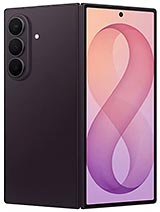
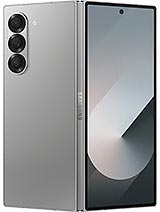
The Samsung Galaxy Z Fold8 Ultra was announced on July 22, 2026. It is the larger of Samsung's two book-style foldables for 2026, with an 8.0-inch inner display, a 6.5-inch cover screen and the Snapdragon 8 Elite Gen 5 for Galaxy chipset. It is the successor to the Galaxy Z Fold7.
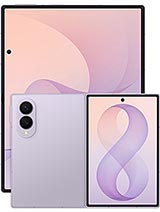
Samsung now sells two Fold8 models. The Ultra keeps the familiar tall form factor and adds a 200MP camera and a 10MP 3x telephoto. The Galaxy Z Fold8 has a wider 7.6-inch 4:3 inner screen, weighs 201 g and uses dual 50MP cameras.
Performance and Processor
The chipset is the Snapdragon 8 Elite Gen 5 for Galaxy (SM8850-1-AD, 3 nm), with two Oryon V3 Phoenix L cores at up to 4.74GHz and six Phoenix M cores at 3.62GHz, plus an Adreno 840 GPU. RAM is 12GB or 16GB depending on the version, with 256GB, 512GB or 1TB of storage and no card slot.
Some reviews report that the phone throttles under sustained load. SpecHub has not run benchmarks or thermal tests, so no performance claim is made here.
Display Experience
The inner display is an 8.0-inch foldable LTPO Dynamic AMOLED 2X panel at 2256 x 2504 pixels (about 421 pixels per inch) with a 120Hz refresh rate and HDR10+. A peak brightness of 3,000 nits is listed, which is a listed figure and not a SpecHub measurement. The 6.5-inch cover screen is a 120Hz Dynamic AMOLED 2X panel.
Reviews describe a less visible crease than on earlier Folds and link it to a Flex Titanium display structure. SpecHub has not tested crease visibility.
Camera Experience
The rear cameras are a 200MP main (f/1.7, 1/1.3-inch sensor, optical stabilisation), a 50MP ultrawide (f/1.9) and a 10MP telephoto (f/2.4, 67mm, optical stabilisation) with 3x optical zoom. Engadget highlights the sharper ultrawide as the main camera upgrade over the previous generation.
Video goes up to 8K at 30fps, with 4K at up to 120fps. There are 10MP selfie cameras on both the cover and inner screens. SpecHub has not tested photo or video quality.
Battery and Charging
The battery is a 5,000mAh silicon-carbon cell, up from 4,400mAh on the previous Fold. Wired charging is 45W (listed as 67% in 30 minutes by GSMArena), wireless charging is 20W (Qi2.2) and reverse wireless charging is 4.5W. The 67% figure is a listed claim and not a SpecHub test.
SpecHub has not run battery-life tests, so no endurance claim is made here.
Software and Features
The phone runs Android 17 with One UI 9, and GSMArena lists up to 7 major OS updates. Connectivity includes 5G, Wi-Fi 7, Bluetooth 6.0, NFC and Ultra Wideband. Notebookcheck lists an IP48 rating and Samsung DeX support.
Reviews note that S Pen support is not available on this generation.
Who Should Consider This Phone?
People who want the largest inner screen, the strongest camera set in Samsung's foldable range and a thin, light book-style body, and who accept the price, will find the most to like.
Who May Prefer Another Phone?
Buyers who want a lower price, a wider screen shape or a lighter body should look at the Galaxy Z Fold8, which weighs 201 g and costs $200 less in the US. Owners of the Galaxy Z Fold7 may see only modest gains, according to several reviews.
Editorial Verdict
On paper, the Fold8 Ultra is Samsung's most capable book-style foldable: a larger battery, faster charging, a newer chipset and a better ultrawide camera over the Fold7. Its main drawbacks are price, the missing S Pen and the IP48 rating. It suits people who want the most capable Samsung foldable and can afford it.