Full Specifications
Launch
| Announced | September 10, 2019 |
| Released | September 20, 2019 |
Network
| Technology | GSM / CDMA / HSPA / EVDO / LTE |
| 5G | No |
| Bands | Vary by model number; see Apple's regional specification pages |
| Speed | LTE-A Cat 19 (up to 1600 Mbps download) |
Body
| Dimensions | 158.0 x 77.8 x 8.1 mm |
| Weight | 226 g |
| Build | Stainless steel frame, textured matte glass back, glass front |
| Water and dust resistance | IP68 (up to 4 m for 30 minutes) |
| SIM | Nano-SIM and eSIM (dual Nano-SIM in China) |
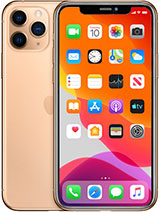
| Colors | Midnight Green, Space Gray, Silver, Gold |
Display
| Type | Super Retina XDR OLED |
| Size | 6.5 inches |
| Resolution | 1242 x 2688 pixels (about 458 ppi) |
| Refresh Rate | 60Hz |
| Peak brightness | 800 nits typical; 1,200 nits peak HDR |
| Features | HDR10, Dolby Vision, True Tone, wide color (P3), Haptic Touch |
Platform
| OS | iOS 13 (at launch) |
| Chipset | Apple A13 Bionic (7 nm) |
| CPU | Hexa-core |
| GPU | Apple GPU (4-core) |
Memory
| RAM | 4 GB (reported; not published by Apple) |
| Storage | 64GB / 256GB / 512GB |
| Card Slot | No |
Camera
| Main | 12 MP, f/1.8, OIS |
| Telephoto | 12 MP, f/2.0, OIS (2x optical zoom) |
| Ultrawide | 12 MP, f/2.4, 120° field of view |
| Front | 12 MP, f/2.2 |
| Video recording | 4K up to 60 fps; slo-mo 1080p at 120 or 240 fps |
Sound
| Speakers | Stereo speakers |
| 3.5mm jack | No |
Connectivity
| Wi-Fi | Wi-Fi 6 (802.11ax) |
| Bluetooth | 5.0 |
| NFC | Yes |
| Ultra Wideband | Yes (U1 chip) |
| USB | Lightning |
Sensors and Security
| Face ID | Yes |
| Sensors | Barometer, gyroscope, accelerometer, proximity sensor, ambient light sensor |
Battery
| Capacity | 3969 mAh (reported; not published by Apple) |
| Wired Charging | Fast charging, about 50% in 30 minutes with an 18W or higher adapter (an 18W adapter is included in the box) |
| Wireless | Qi up to 7.5W |
Price
| Launch price (US, USD) | $1,099 (64GB) |
| Availability | Discontinued by Apple; availability varies by region |
Prices are provided for reference and may change over time. Actual prices vary by region, retailer, storage configuration, taxes, and promotions. Check with local retailers for the latest price.
Specifications are collected from available manufacturer information and reliable sources. While we make efforts to keep this page accurate and up to date, some details may change or vary by region and configuration. If a specification is important to your purchase, confirm it with the manufacturer or seller.
Editorial Overview
This is an editorial analysis of the specifications listed on this page. It is not based on SpecHub lab testing, so it makes no claims about benchmarks, battery life or camera results. Manufacturer lab figures are not reproduced here.
Phone Overview
The iPhone 11 Pro Max was the largest iPhone of 2019, released on September 20, 2019 at $1,099 in the US. It shares its chip, cameras and stainless steel build with the smaller iPhone 11 Pro, but adds a 6.5-inch screen and a bigger battery. It was aimed at buyers who wanted maximum screen size and battery life. It is now an older phone.
Performance and Processor
The Apple A13 Bionic is a 7 nm chip with a six-core CPU and a four-core GPU. Independent sources report 4GB of RAM, which Apple does not publish. Storage is 64GB, 256GB or 512GB with no card slot. SpecHub has not benchmarked the phone.
Display Experience
The 6.5-inch Super Retina XDR OLED display has 1242 x 2688 pixels (about 458 ppi) and a 60Hz refresh rate. Apple rates it for 800 nits typical and up to 1,200 nits peak in HDR, with Dolby Vision support. The larger panel suits video and reading better than the 5.8-inch iPhone 11 Pro.
Camera Experience
The rear cameras are a 12MP main (f/1.8, optical stabilisation), a 12MP telephoto (f/2.0, 2x optical zoom, optical stabilisation) and a 12MP ultrawide (f/2.4, 120 degrees). The front camera is 12MP. Video goes up to 4K at 60 fps. SpecHub has not tested image quality.
Battery and Charging
Apple does not publish battery capacity. Independent sources report 3969 mAh, the largest of the iPhone 11 family, against 3046 mAh for the iPhone 11 Pro. Apple states about 50% in 30 minutes with an 18W or higher adapter, and an 18W adapter is included. Wireless charging uses Qi at up to 7.5W. We have no endurance tests, and an older battery may hold less charge today.
Software and Features
The phone launched with iOS 13 and supports Wi-Fi 6, Bluetooth 5.0, NFC and Ultra Wideband. It has Face ID and an IP68 rating up to 4 metres for 30 minutes. It uses a Lightning port and does not support 5G.
Who Should Consider This Phone?
People who want a large OLED screen and a long-lasting battery in an older iPhone, and who can accept the weight, may still find it a good match at a secondhand price.
Who May Prefer Another Phone?
Buyers who want 5G, USB-C, a 120Hz display or a lighter phone should look at a newer iPhone. Those who prefer a smaller body can consider the iPhone 11 Pro.
Editorial Verdict
The iPhone 11 Pro Max combined a big OLED screen, three cameras and the largest battery of its generation. Its weight, Lightning port and lack of 5G show its age.